


News & Events


In response to the increasing climate threats and multiple disasters, how can we enhance urban resilience? On October 19, RISE Week 2025 officially opened at Tongji University, bringing together global experts, policymakers, and urban practitioners to discuss this critical issue.
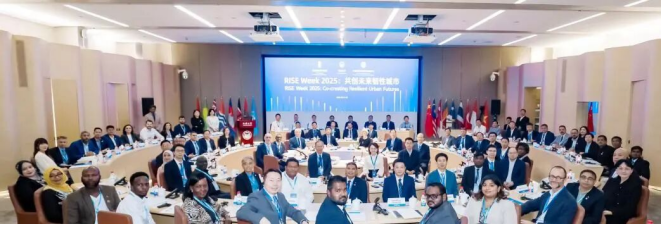
RISE Week 2025 is the inaugural Disaster Resilience Innovation Capacity Building Workshop initiated by the "UNDP-Tongji University Urban Disaster Prevention and Resilience Innovation Lab (RISE Lab)", jointly organized by the United Nations Development Programme (UNDP) and Tongji University, and guided by the China International Center for Economic and Technical Exchanges (CICETE). RISE stands for Resilience, Innovation, Sustainability, and Empowerment. The event attracted policymakers, international organization and government officials, technical experts, and practitioners from the urban infrastructure construction sector from 15 countries (including Brazil, Cambodia, Egypt, Fiji, Indonesia, Kenya, Kiribati, Maldives, Malaysia, Nepal, Thailand, Turkey, Solomon Islands, Sri Lanka, and Vietnam). The event received support from the State Key Laboratory of Disaster Reduction in Civil Engineering at Tongji University and the Tongji University High-Speed Rail and Station-City Integration Research Institute.
With the theme of "Co-creating the Future of Resilient Cities," the event positions resilience as a key guarantee for sustainable development and an engine for innovation, issuing a call to action for cities worldwide. By promoting collaboration among government departments, academia, and enterprises, it aims to help cities address climate challenges and drive them towards a more prosperous and sustainable future through technological innovation, experience sharing, and cooperation.
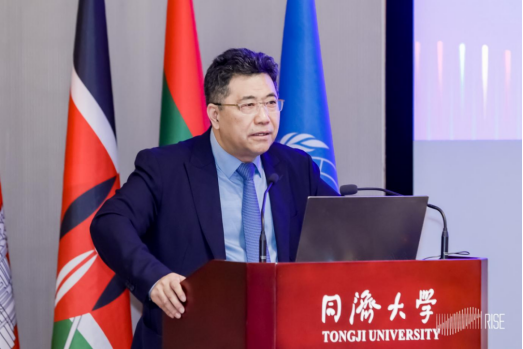
Prof. Peiming Lyu, Executive Vice President of Tongji University, said, "As the first urban resilience innovation platform jointly established by UNDP and a Chinese university, the RISE Lab aims to provide replicable and scalable solutions for global cities through knowledge innovation, policy empowerment, and technical cooperation, contributing to the achievement of the UN 2030 Sustainable Development Goals."
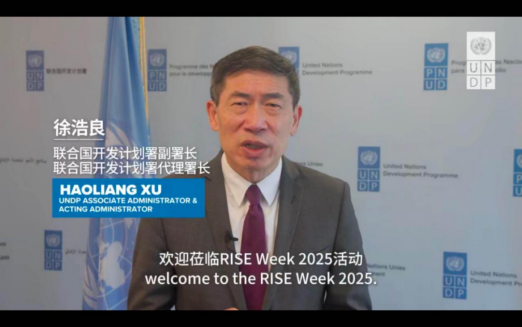
Mr. Haoliang Xu, UN Under-Secretary-General and Associate Administrator of UNDP, stated in a video speech: "This conference is taking place at a critical juncture. Global cities are both the frontiers of development and the front lines of risk. They serve as vital engines for innovation and economic growth, yet they simultaneously face multiple challenges stemming from climate change, natural disasters, and social inequality."
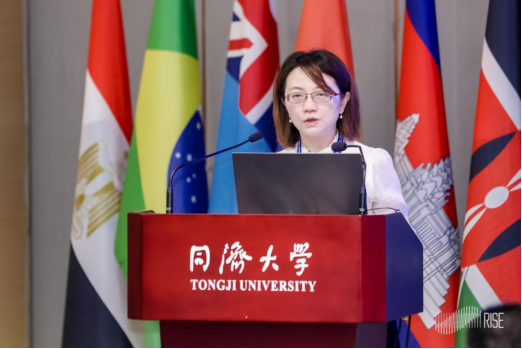
Prof. Ying Zhou, Director of RISE Lab and ILEE, Dean of the College of Civil Engineering, and Director of the Development Planning and Discipline Construction Department at Tongji University, emphasized three key directions: first, strengthening international cooperation to jointly build resilient cities amid rapid global urbanization; second, cultivating a new generation of global resilient city leaders through education and cross-cultural exchange; and third, promoting engineering-driven innovation to reduce urban disaster risks.
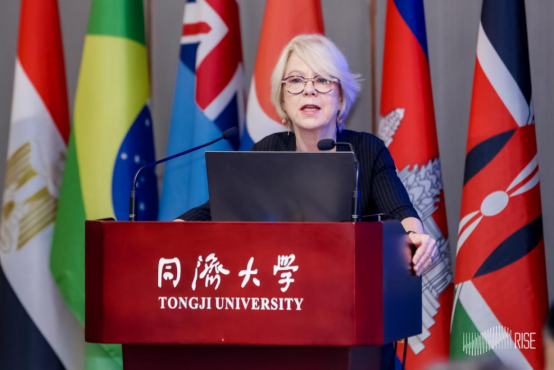
Ms. Beate Trankmann, UNDP Resident Representative in China, pointed out: "Building urban resilience faces multi-dimensional challenges. Developing efficient resilience solutions requires pooling wisdom, mutual learning, and collaborative efforts both among cities and across sectors. Everyone bears an important mission. This is precisely the significance of RISE Week—it establishes an interdisciplinary and cross-border platform for exchange and cooperation."
Conference Reports
RISE Week began with technical seminars on October 17, with Tongji University Vice President Xiangning Li attending the opening session and delivering a welcome speech.
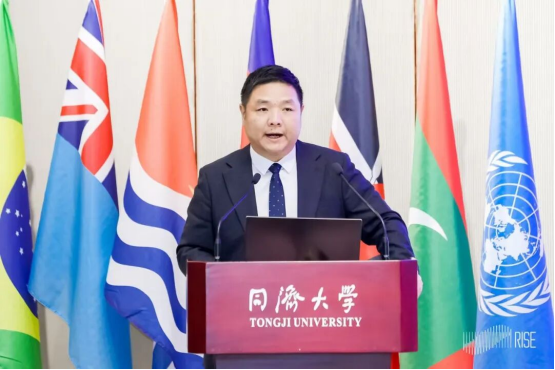
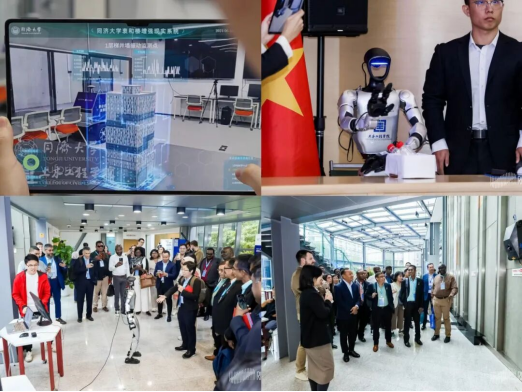
During RISE Week, participants engaged in in-depth discussions focusing on risk assessment, resilient infrastructure, and digital innovation in disaster prevention and reduction.
Presentations included:
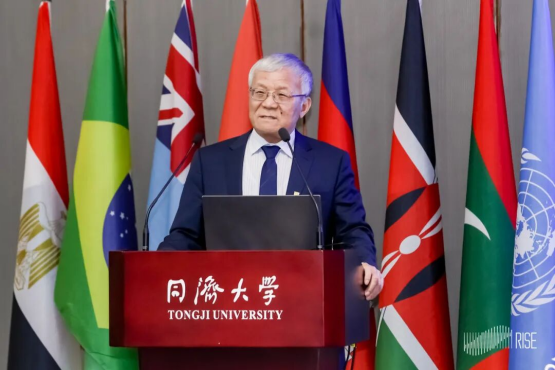
Academician Xilin Lu, Chairman of the Scientific Committee for ILEE, winner of the Shanghai Science and Technology Contributor Award: On seismic disaster prevention for urban high-rise buildings and structural recoverability.
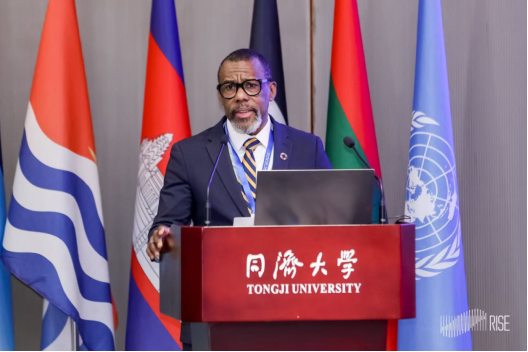
Mr. Ronald Jackson, Director, Disaster Risk Reduction and Resilience Building Team, Crisis Bureau, UNDP: On urban resilience, addressing existing needs and emerging priorities.
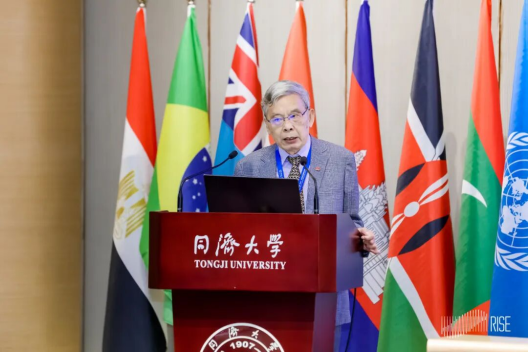
Prof. Jie Li, College of Civil Engineering, Tongji University; Honorary Director, Shanghai Institute of Disaster Prevention and Relief: On reliability analysis and optimal design of lifeline engineering seismic resistance.
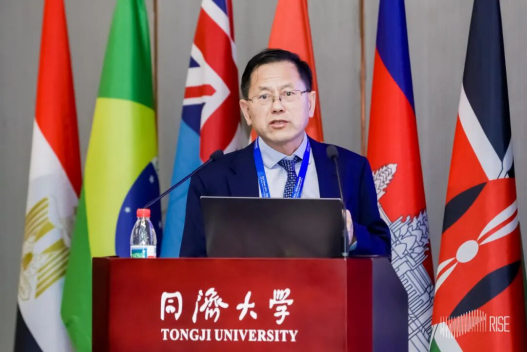
Prof. Hehua Zhu, College of Civil Engineering, Tongji University; Director, State Key Laboratory of Disaster Reduction in Civil Engineering: On intelligent disaster prevention and reduction for infrastructure.
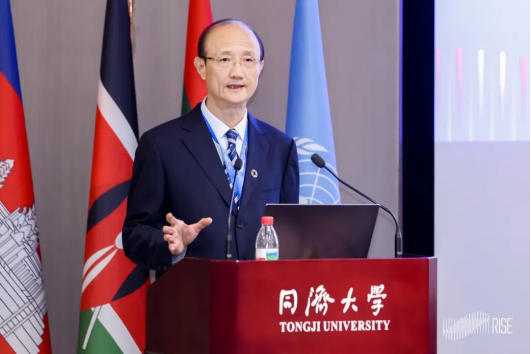
Mr. Jian Zheng, Former Chief Engineer, China State Railway Group Co., Ltd.; Dean, High-Speed Rail and Station-City Integration Research Institute, Tongji University: On innovative practices in China's railway development.
In addition to academic lectures, the event featured policy dialogues, leadership training, and field visits, integrating technology, policy, and governance to enhance climate adaptation and disaster prevention capabilities. RISE Week continued until October 22.
Participant Interviews
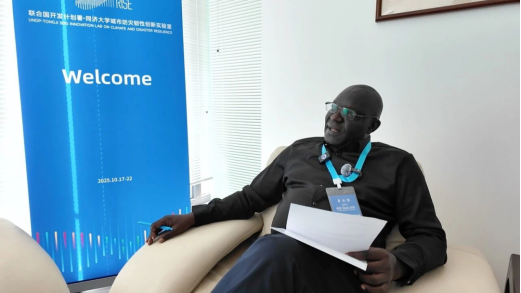
Gordon Muga, Senior Deputy Secretary of the National Disaster Operations Centre (NDOC), Kenya: What impressed me most is the close cooperation model between universities and industry. For example, in the transportation sector, they collaborated with Tongji University to establish labs and conduct research on enhancing the resilience of transportation systems and reducing risks. This research not only proposed practical solutions but also successfully translated the results into practice.
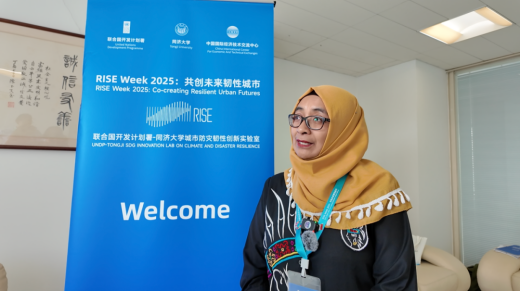
Wiwandari Handayani, Head and Professor of the Department of Urban and Regional Planning at Diponegoro University, Indonesia: The theme of this conference is highly relevant to my research and work—it closely aligns with both my academic pursuits as a university professor and my practical efforts in promoting urban resilience in Indonesia through government engagement. Additionally, I hope to take this opportunity to exchange ideas and share experiences with representatives from different countries, exploring ways to jointly advance urban resilience through collaboration.
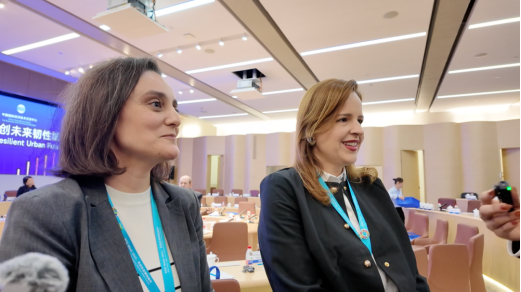
Paula Coelho da Nóbrega, Project Monitoring Director of the Ministry of Cities, Brazil, and Vaneska Paiva Henrique, Urban Planning Coordinator of the Environment, Urban and Sustainable Development Secretariat, Porto Alegre Municipality: Brazil is committed to building more resilient and sustainable cities. Our primary challenge lies in how to support cities in better coping with increasingly frequent and intense climate events while enhancing their disaster prevention resilience.
We hope to exchange experiences with counterparts from different countries during this conference, gain insights from technical experts, and learn how to better prepare for these challenges. Additionally, municipal representatives from Porto Alegre aim to leverage this opportunity to learn from international best practices in flood prevention and response.
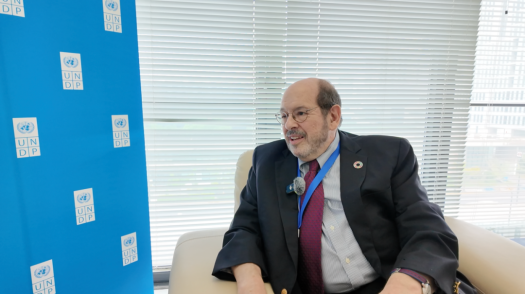
Arnold Howitt, Founder and Co-Director of the Program on Crisis Leadership at Harvard University, and Distinguished Visiting Professor at Tsinghua University's Schwarzman College: In my view, resilience means helping countries and communities, sometimes even at the neighborhood level, to prepare for emergencies, identify potential risks, and take measures to mitigate potential losses. Over the years, I have studied China's emergency management and deeply admire its progress following crises such as SARS, the 2008 southern snowstorms, and the Wenchuan earthquake. These major shocks have driven tangible improvements and innovations. Just like many other countries around the world, China still needs to continuously enhance its preparedness and response capabilities for future large-scale disasters and public health incidents.

Copyright © 2023 International Joint Research Laboratory of Earthquake Engineering; All rights reseved
 loading......